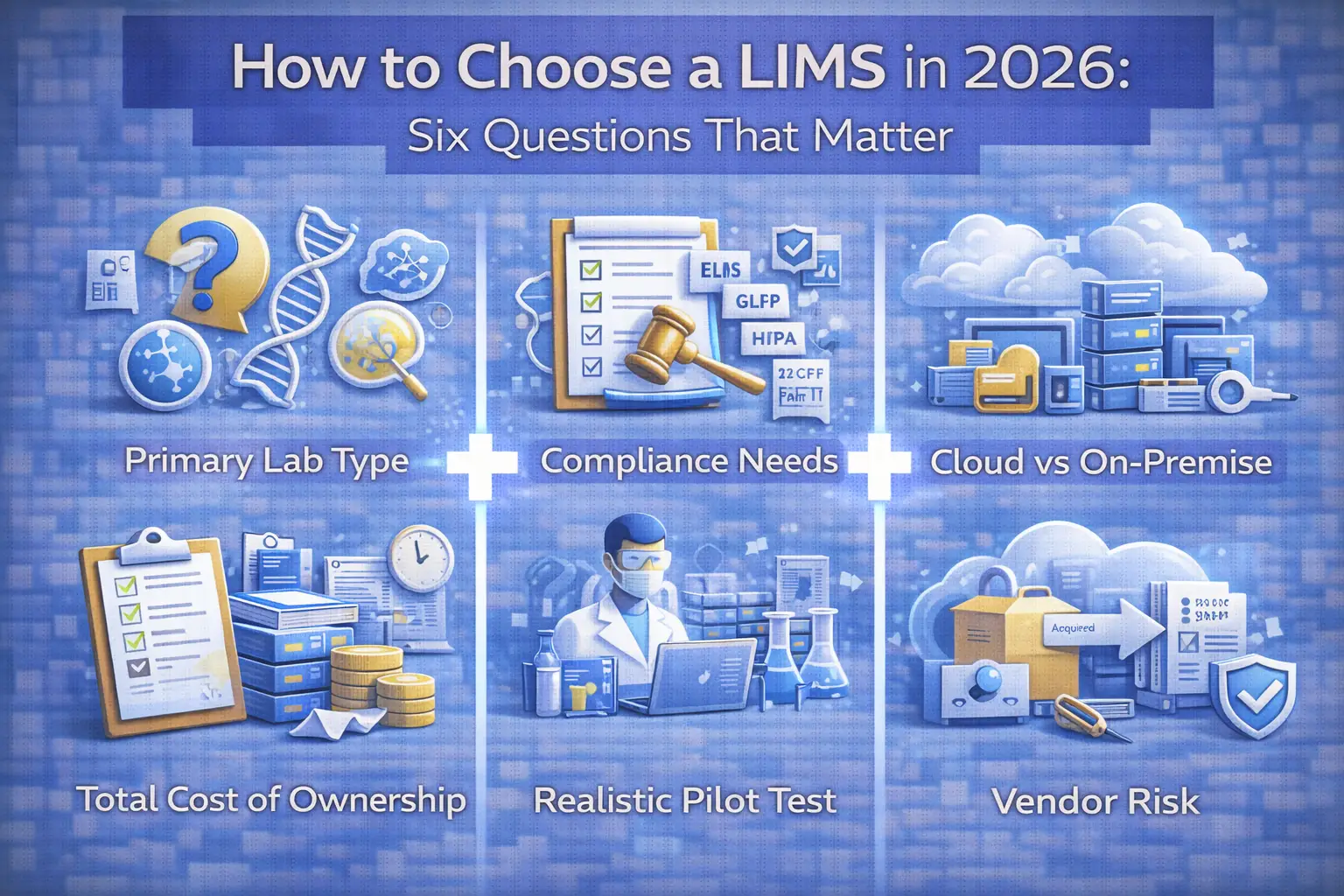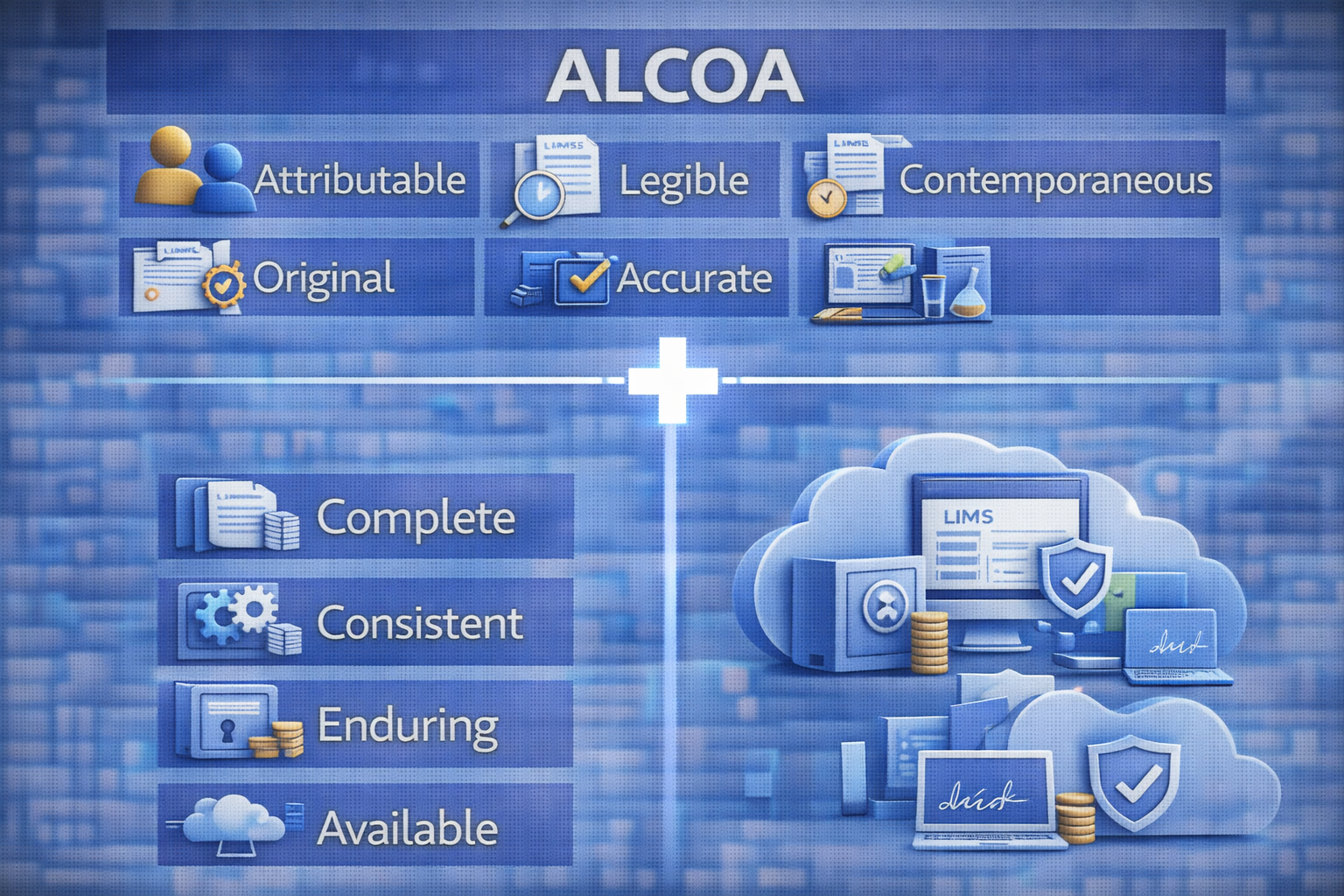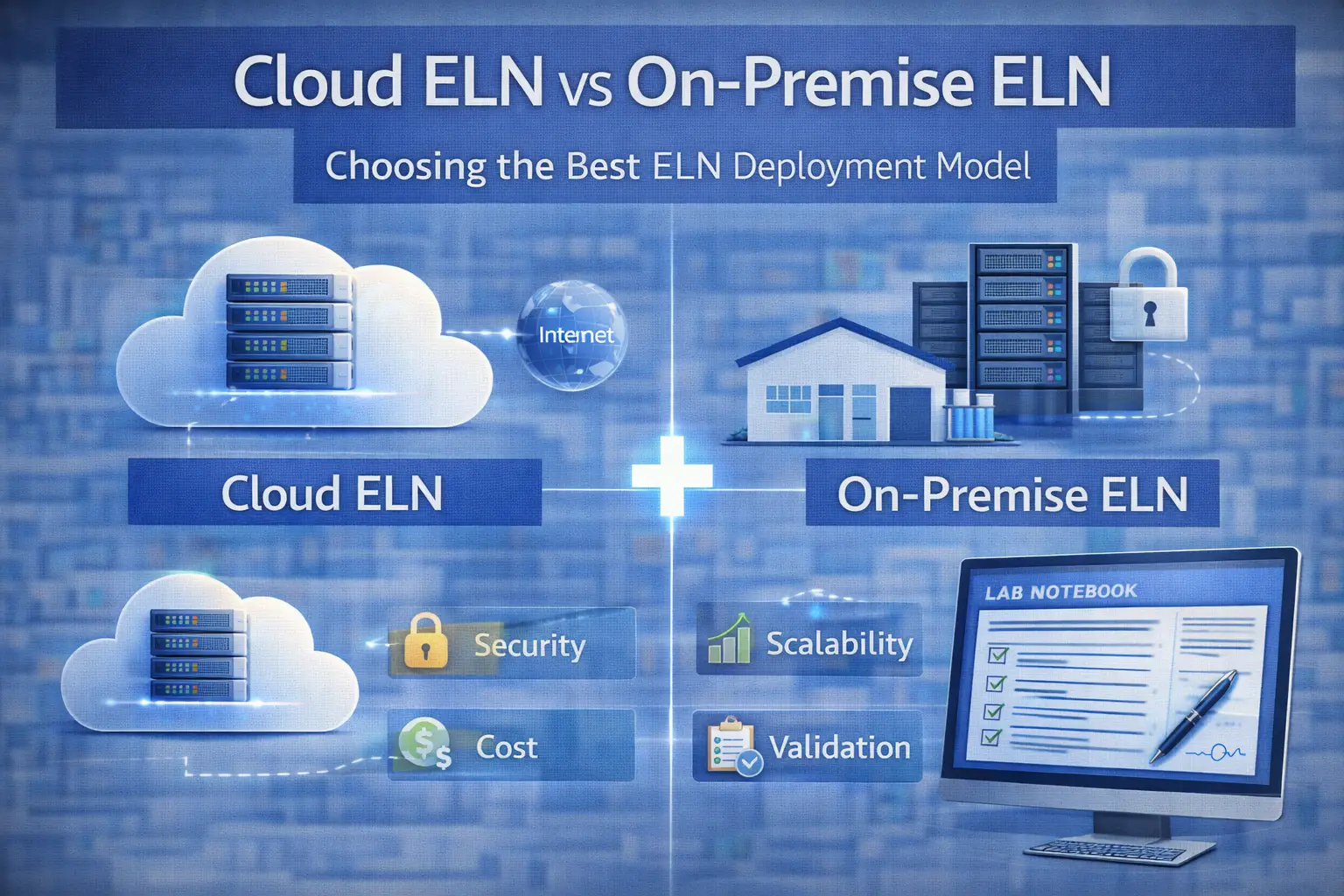
As laboratories accelerate digital transformation, one critical decision emerges: Cloud ELN vs On-Premise ELN.
Electronic Laboratory Notebooks (ELNs) are now central to compliance, collaboration, and data integrity. But choosing how to deploy your ELN is just as important as choosing the software itself.
The debate around Cloud ELN vs On-Premise ELN is not simply technical—it’s strategic. It impacts compliance, IT governance, validation workload, cost structure, and long-term scalability.
Let’s break it down clearly for modern laboratory decision-makers.
Introduction to Cloud ELN vs On-Premise ELN
ELNs have become a foundational element of digital lab infrastructure. Organizations ranging from biotech startups to global pharmaceutical companies rely on ELNs for documentation, compliance, and intellectual property protection.
Industry analysts like Gartner consistently highlight cloud adoption as a key trend in enterprise software—including laboratory systems.
Yet regulated industries remain cautious.
So how do you choose?
Understanding the differences is essential.
What Is a Cloud ELN?
Definition and Architecture
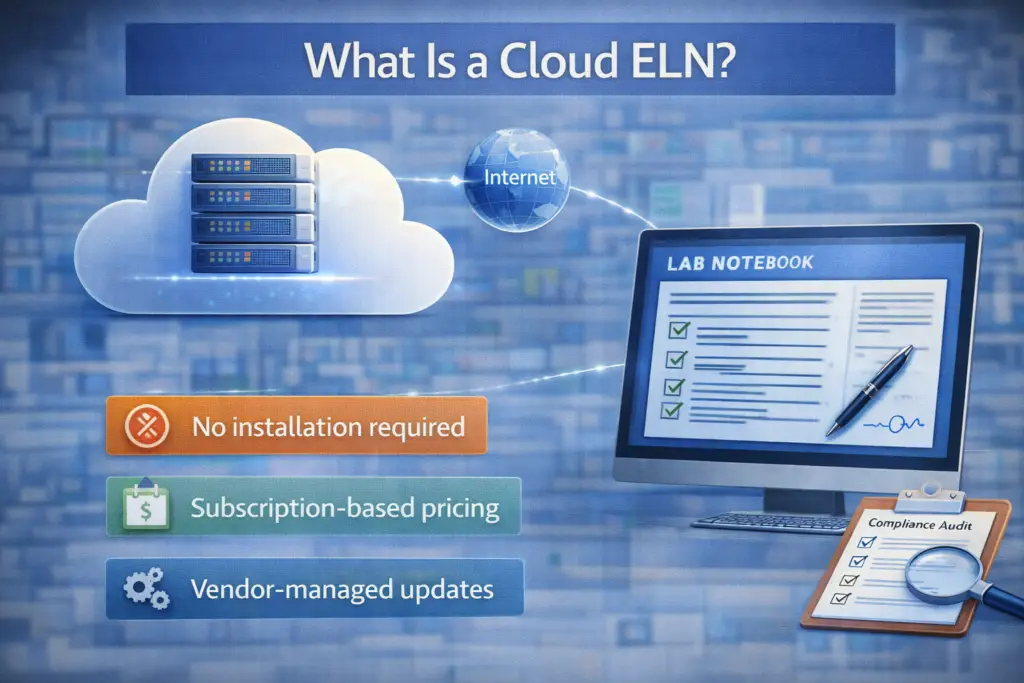
A Cloud ELN is hosted on external servers managed by a vendor or third-party provider. Users access it through a web browser.
Most Cloud ELNs follow a Software-as-a-Service (SaaS) model, meaning:
- No local installation required
- Subscription-based pricing
- Vendor-managed updates
- Remote accessibility
Infrastructure, maintenance, and security patching are typically handled by the provider.
Typical Cloud Deployment Models (SaaS, PaaS)
Common models include:
- SaaS (Software as a Service) – Fully managed by vendor
- Private Cloud – Dedicated environment with controlled access
- Hybrid Cloud – Mix of on-premise and cloud components
Cloud ELNs are designed for scalability and rapid deployment.
What Is an On-Premise ELN?
Local Infrastructure Model
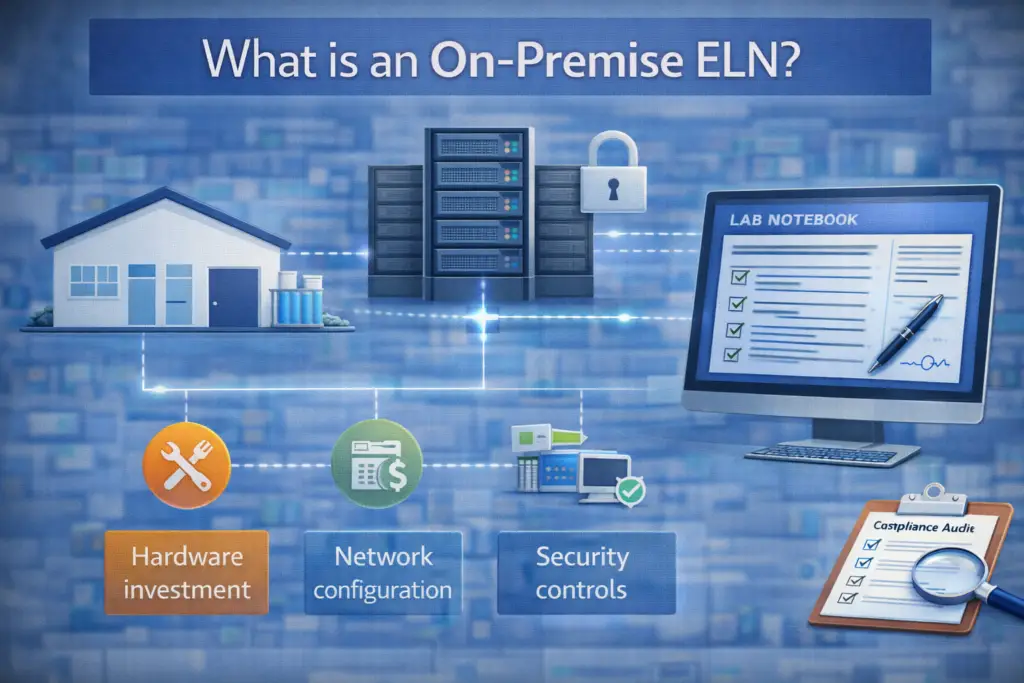
An On-Premise ELN is installed on servers within the organization’s physical infrastructure.
The laboratory’s IT department manages:
- Hardware
- Network configuration
- Security controls
- Backup procedures
- Software updates
Everything remains under internal control.
IT Ownership and Maintenance
With on-premise systems:
- Full customization is possible
- Internal IT handles upgrades
- Validation responsibility increases
- Infrastructure investment is required
This model appeals to organizations with strict internal IT governance.
Cloud ELN vs On-Premise ELN: Core Technical Differences
Hosting and Infrastructure
| Cloud ELN | On-Premise ELN |
|---|---|
| Hosted externally | Hosted internally |
| Vendor-managed infrastructure | Lab-managed servers |
| Automatic updates | Manual update cycles |
Cloud removes infrastructure burden.
On-premise increases control but adds responsibility.
Accessibility and Remote Collaboration
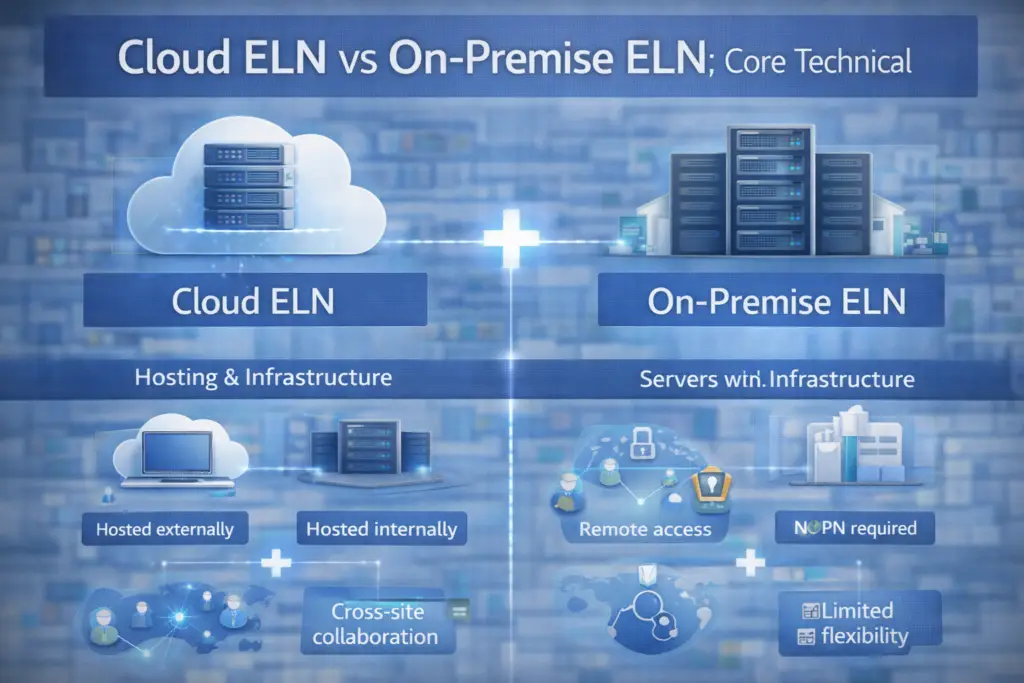
Cloud ELNs allow:
- Remote access
- Cross-site collaboration
- Global team integration
On-premise ELNs may require VPN access, which can limit flexibility.
In today’s distributed research environment, accessibility matters.
Security Comparison: Myth vs Reality
Security is often the main concern in the Cloud ELN vs On-Premise ELN debate.
Data Encryption and Cybersecurity
Modern cloud providers invest heavily in:
- End-to-end encryption
- Multi-factor authentication
- Continuous monitoring
- Certified data centers
Large providers often maintain stronger cybersecurity frameworks than internal IT departments.
Physical vs Virtual Risk Exposure
On-premise systems face risks such as:
- Local hardware failure
- Physical intrusion
- Limited cybersecurity staffing
Cloud systems face:
- Shared infrastructure concerns
- Vendor reliance
- Internet connectivity dependency
Security depends more on governance than deployment model.
Regulatory Compliance Considerations
21 CFR Part 11 and GxP Alignment
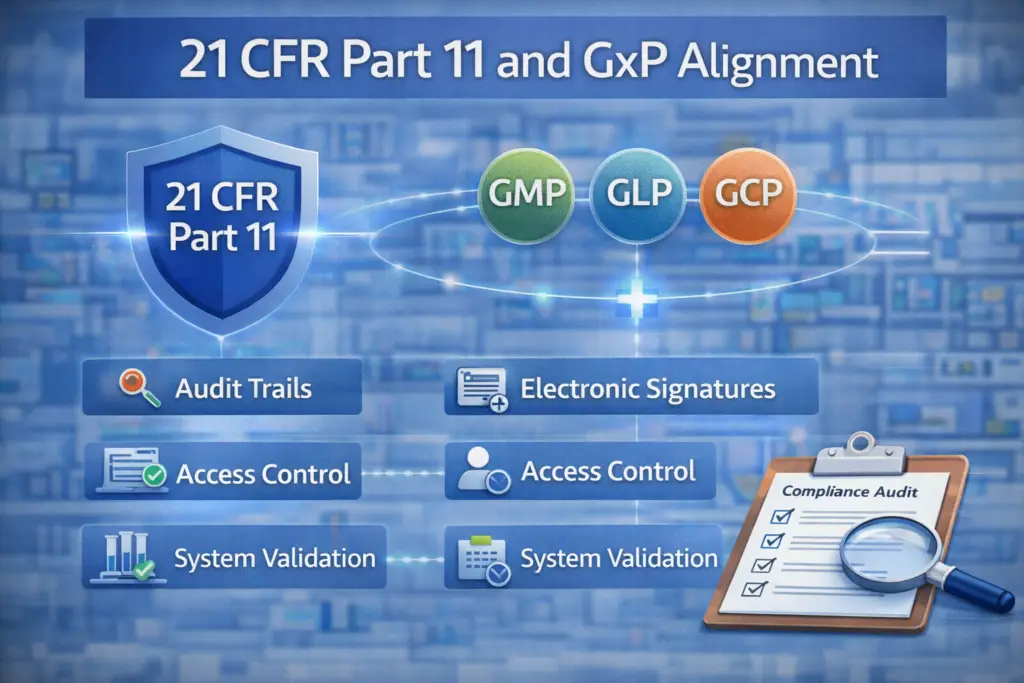
Regulations enforced by the U.S. Food and Drug Administration apply regardless of hosting model.
Both deployment types must support:
- Audit trails
- Electronic signatures
- Access control
- System validation
Compliance is not determined by cloud vs on-premise—it is determined by system configuration and validation.
Vendor Qualification and Audit Rights
For cloud systems, laboratories must:
- Qualify vendors
- Review security certifications
- Establish SLAs
- Ensure audit access
Vendor oversight becomes critical.
Validation and Change Control
Cloud ELNs:
- Vendor-managed updates
- Shared responsibility model
- May simplify infrastructure validation
- Require strong change control evaluation
On-premise ELNs:
- Full control over upgrade timing
- Higher internal validation burden
- Greater documentation responsibility
Cloud often reduces validation complexity—but not validation accountability.
Scalability and Performance
Cloud ELNs scale easily:
- Add users instantly
- Expand storage automatically
- Handle variable workload
On-premise scaling requires:
- Hardware upgrades
- Capacity planning
- Additional infrastructure investment
For growing labs, scalability is a decisive factor.
Cost Analysis: CAPEX vs OPEX
Cloud ELNs operate on OPEX (operational expense):
- Subscription-based
- Predictable monthly costs
- Lower upfront investment
On-premise ELNs require CAPEX (capital expense):
- Server hardware
- Infrastructure setup
- IT staffing
Long-term cost comparisons depend on scale and internal resources.
Implementation Speed and IT Burden
Cloud deployment:
- Faster implementation
- Reduced IT workload
- Minimal infrastructure setup
On-premise deployment:
- Longer setup timeline
- Infrastructure provisioning required
- Higher technical involvement
Speed matters for innovation-driven labs.
Disaster Recovery and Business Continuity
Cloud ELNs typically include:
- Automated backups
- Geographic redundancy
- Built-in disaster recovery
On-premise systems require:
- Internal backup planning
- Secondary data centers
- Manual recovery testing
Business continuity planning is often more robust in cloud environments.
When to Choose Cloud ELN
Choose Cloud ELN if:
- You need rapid deployment
- Your lab operates across multiple locations
- IT resources are limited
- Scalability is critical
- Subscription pricing aligns with budget strategy
When to Choose On-Premise ELN
Choose On-Premise ELN if:
- Strict internal data hosting policies exist
- Internet access is limited
- Custom infrastructure integration is required
- Corporate governance mandates internal hosting
Hybrid Approaches: The Emerging Middle Ground
Many organizations now adopt hybrid strategies:
- Core ELN functions in cloud
- Sensitive integrations on-premise
- Private cloud environments
- Phased migration approaches
Hybrid models offer flexibility and risk balance.
Frequently Asked Questions
1. Is Cloud ELN compliant with FDA regulations?
Yes, if properly configured and validated.
2. Is On-Premise more secure than Cloud?
Not necessarily. Security depends on implementation and governance.
3. Which is more expensive long-term?
It depends on infrastructure scale and IT staffing costs.
4. Is validation easier in the Cloud?
Infrastructure validation may be reduced, but system validation remains required.
5. Can labs migrate from On-Premise to Cloud?
Yes, with proper data migration planning and validation.
6. What is the biggest risk in cloud adoption?
Insufficient vendor qualification and unclear responsibility boundaries.
Conclusion: Making a Strategic ELN Deployment Decision
The decision between Cloud ELN vs On-Premise ELN is not about right or wrong—it’s about alignment.
Cloud offers:
- Agility
- Scalability
- Lower infrastructure burden
- Faster deployment
On-Premise offers:
- Direct infrastructure control
- Internal governance alignment
- Custom integration flexibility
Modern laboratories must evaluate:
- Regulatory requirements
- IT capabilities
- Growth strategy
- Risk tolerance
Ultimately, the best deployment model is the one that supports compliance, data integrity, and operational excellence—without slowing innovation.
In a rapidly evolving scientific environment, strategic deployment decisions shape long-term success.