
ELN vs LIMS: What’s the Difference?
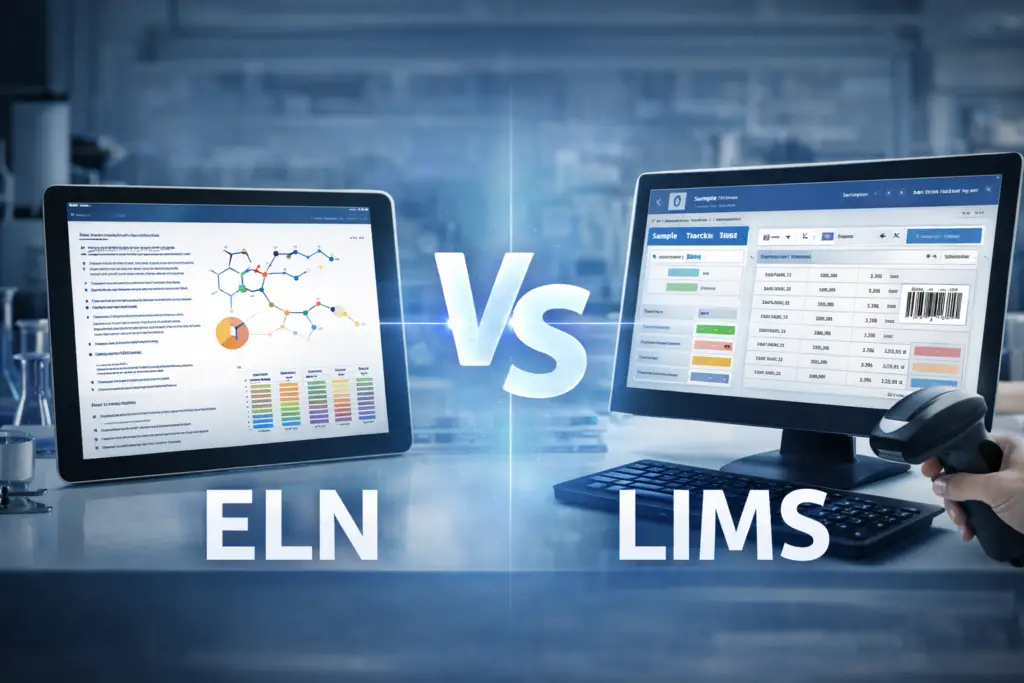
Let’s break it down clearly, practically, and strategically! At first glance, ELN and LIMS may look similar. They both digitize laboratory processes. They both store data. They both improve compliance. But here’s the key distinction: Understanding this core difference is the foundation of choosing the right solution. Modern laboratories—from pharma and biotech to environmental testing—rely on digital systems to improve efficiency, traceability, and regulatory compliance. According to industry research from organizations like Gartner, digital transformation in scientific environments is accelerating rapidly. And that’s where ELN and LIMS step in. What Is a Laboratory Information Management System (LIMS)? A Laboratory Information Management System (LIMS) is designed to manage samples, workflows, and operational processes within a laboratory. Think of LIMS as the operational backbone of a lab. Core Functions of LIMS LIMS typically handles: If your lab processes thousands of samples per day, LIMS ensures nothing gets lost, delayed, or misreported. Industries That Rely on LIMS LIMS is essential in: These sectors operate in highly regulated environments, often under standards enforced by agencies such as the U.S. Food and Drug Administration. In these settings, traceability and audit readiness aren’t optional—they’re mandatory. What Is an Electronic Laboratory Notebook (ELN)? An Electronic Laboratory Notebook (ELN) is a digital replacement for the traditional paper lab notebook. But modern ELNs go far beyond simple note-taking. They are designed to document experiments, protocols, calculations, and scientific insights in a structured, searchable digital format. Core Functions of ELN ELNs typically offer: In short, ELNs are built for scientists conducting research—not necessarily for labs processing high volumes of samples. Research Environments Using ELN ELNs are widely adopted in: They are ideal for innovation-driven environments where flexibility and collaboration matter more than high-throughput automation. ELN vs LIMS: What’s the Difference in Core Purpose? This is the heart of the question: ELN vs LIMS: What’s the Difference? Data Management vs Experimental Documentation LIMS ELN Manages structured sample data Documents experimental research Focuses on lab operations Focuses on scientific thinking Standardized workflows Flexible research workflows LIMS is operational.ELN is scientific. Compliance and Regulatory Focus LIMS systems are heavily compliance-driven. They include: ELNs also support compliance, but often in the context of: ELN vs LIMS: Feature-by-Feature Comparison Let’s compare them directly. Sample Tracking Workflow Automation Collaboration Reporting and Analytics Integration Capabilities and Interoperability Modern labs rarely operate in silos. Both ELN and LIMS can integrate with: However, LIMS typically integrates more deeply with enterprise infrastructure, while ELNs focus on research tool connectivity. Regulatory Compliance and Data Integrity In regulated industries, compliance isn’t negotiable. 21 CFR Part 11 and Audit Trails Both systems may support compliance with regulations such as: LIMS implementations are often validated according to strict regulatory frameworks. ISO and GMP Considerations LIMS is heavily used in GMP and ISO-certified environments. ELN systems are more common in pre-clinical and research phases. Implementation Complexity and Costs LIMS implementations are typically: ELNs are often: That said, cloud-based LIMS solutions are reducing deployment time significantly. When Should a Lab Choose LIMS? Choose LIMS if: When Should a Lab Choose ELN? Choose ELN if: Can ELN and LIMS Work Together? Absolutely. Many modern labs use both systems. Integrated solutions allow: Some vendors even offer hybrid ELN-LIMS platforms. Cloud-Based vs On-Premise Considerations Cloud deployment offers: On-premise offers: Security concerns have decreased significantly as major cloud providers meet strict compliance standards. Emerging Trends in ELN and LIMS Software The future is exciting. Key trends include: The laboratory of the future is fully digital. Frequently Asked Questions 1. Can ELN replace LIMS? No. ELN and LIMS serve different purposes. They complement each other. 2. Is LIMS more expensive than ELN? Generally, yes. LIMS implementations are more complex and enterprise-focused. 3. Which is better for small labs? Small research labs often start with ELN. Testing labs usually require LIMS. 4. Do ELN systems support regulatory compliance? Yes, many modern ELNs support electronic signatures and audit trails. 5. Can both systems be cloud-based? Yes. Both ELN and LIMS solutions are widely available in cloud formats. 6. How long does implementation take? ELN: Weeks to months.LIMS: Months to over a year depending on complexity. Conclusion: Making the Right Choice for Your Lab So, ELN vs LIMS: What’s the Difference? The answer is clear: If your independent media focuses on LIMS and ELN software, educating your audience on this distinction will position your platform as an authoritative voice in the lab informatics sector. As laboratories continue their digital transformation journey, understanding these tools isn’t optional—it’s strategic. Choose wisely. Or better yet—integrate both.