In today’s regulated laboratory landscape, ELN Compliance and Data Integrity are no longer optional technical features—they are foundational requirements for operational legitimacy and scientific credibility.
Electronic Laboratory Notebooks (ELNs) have replaced paper notebooks in many research and quality environments. But moving from paper to digital does not remove compliance obligations. In fact, it increases regulatory scrutiny.
Understanding ELN Compliance and Data Integrity is essential for QA managers, lab directors, IT compliance officers, and regulatory affairs professionals. Without strong controls, laboratories risk inspection findings, warning letters, data rejection, or reputational damage.
Let’s explore how to get it right.
Introduction to ELN Compliance and Data Integrity
Digital transformation in laboratories has accelerated dramatically. Regulatory agencies now expect electronic systems to meet strict standards for reliability, traceability, and security.
Authorities such as the U.S. Food and Drug Administration require that electronic records be trustworthy, accurate, and protected against unauthorized changes.
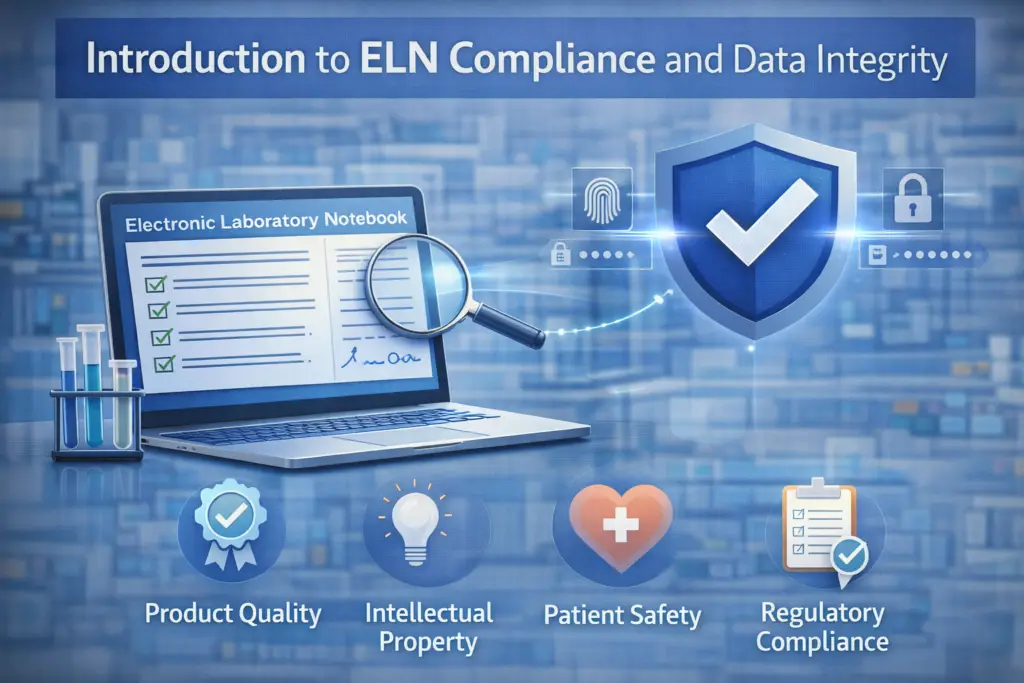
ELNs directly impact:
- Experimental documentation
- Intellectual property
- Product quality decisions
- Clinical and manufacturing data
That is why compliance and integrity must be designed into the system—not added later.
What Does ELN Compliance Mean?
Regulatory Alignment in Digital Laboratories
ELN compliance means that the system:
- Meets applicable regulatory requirements
- Produces reliable electronic records
- Maintains traceability of all changes
- Ensures secure authentication of users
- Protects data against unauthorized access
It is not just about software functionality—it is about documented proof that the system works as intended.
Electronic Records and Signatures Requirements
Electronic records must be:
- Accurate
- Complete
- Secure
- Tamper-evident
Electronic signatures must be:
- Unique to individuals
- Verifiable
- Linked to their corresponding records
- Protected against misuse
These requirements are central to compliance frameworks worldwide.
Understanding Data Integrity in Scientific Environments
The ALCOA+ Principles
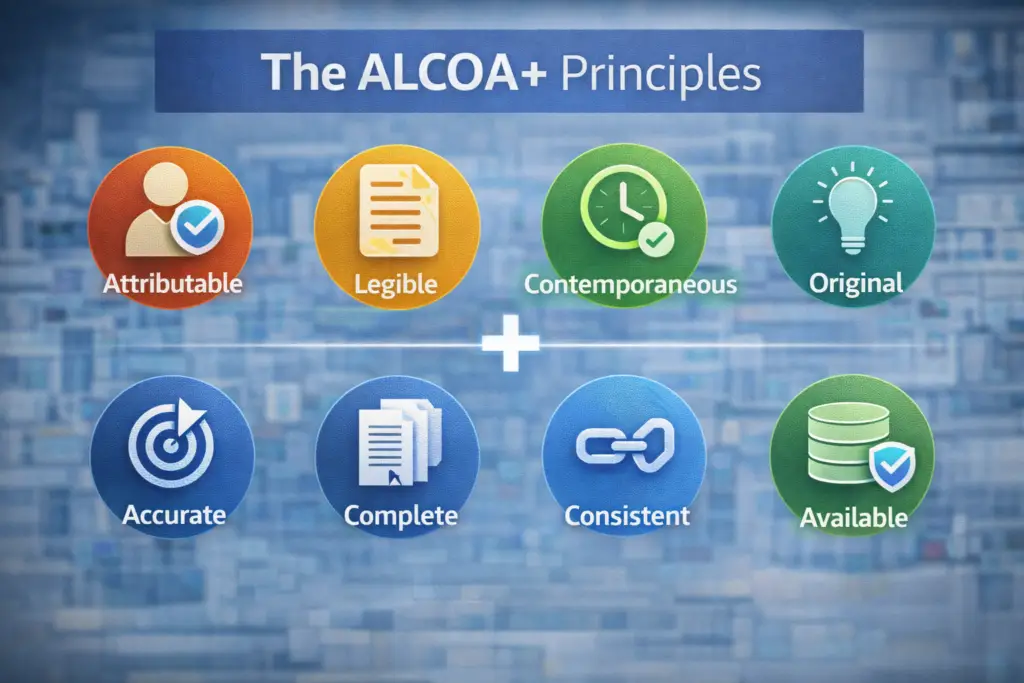
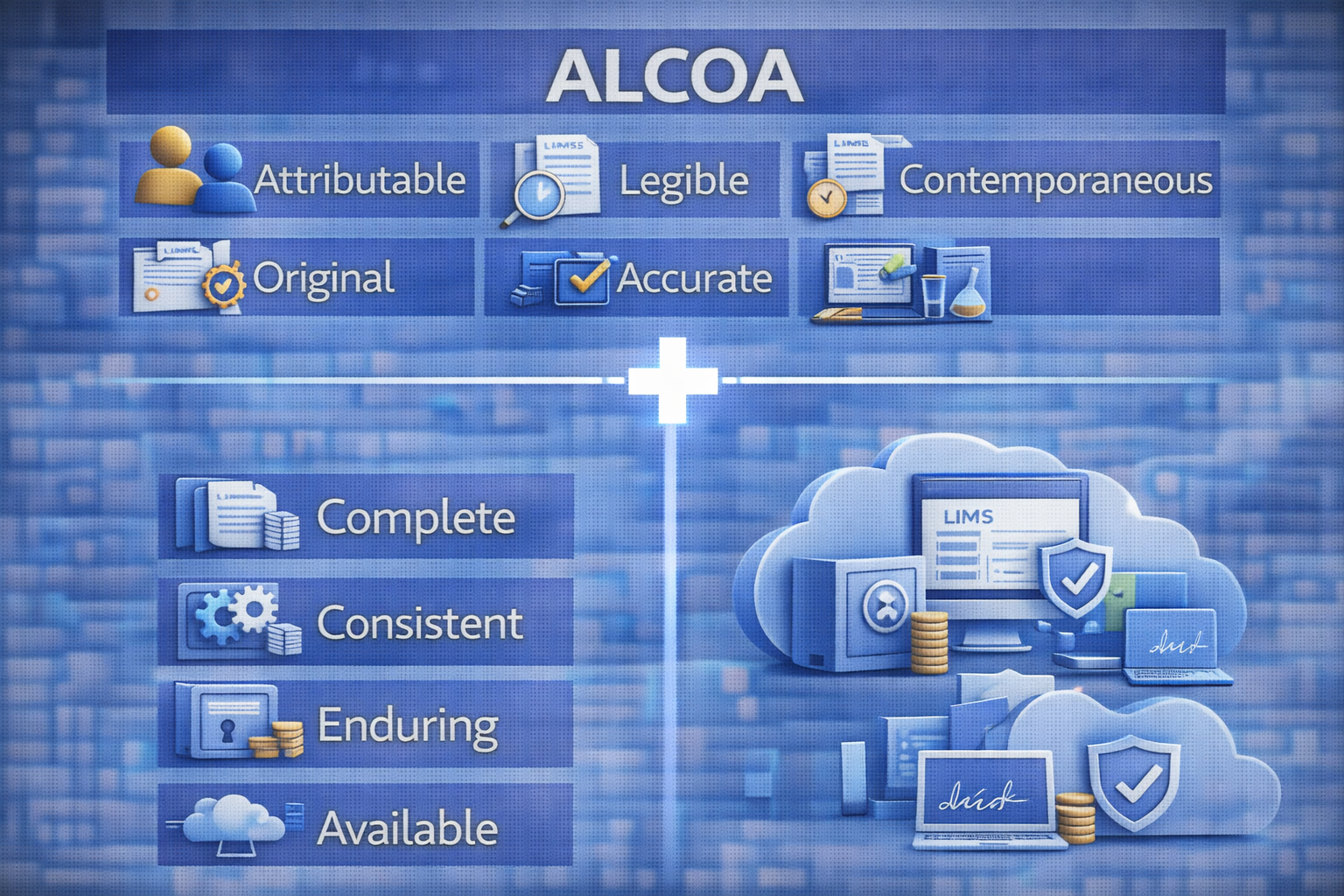
Data integrity is often summarized by ALCOA+:
- Attributable
- Legible
- Contemporaneous
- Original
- Accurate
The “+” includes:
- Complete
- Consistent
- Enduring
- Available
ELNs must support all these principles natively.
Why Data Integrity Is Under Regulatory Scrutiny
Regulatory agencies have increased enforcement actions related to data manipulation, incomplete audit trails, and undocumented changes.
Data integrity failures can lead to:
- Rejected product batches
- Invalidated studies
- Inspection citations
- Market access delays
Digital systems must therefore prove they maintain integrity automatically and consistently.
Key Regulatory Frameworks Impacting ELN Compliance
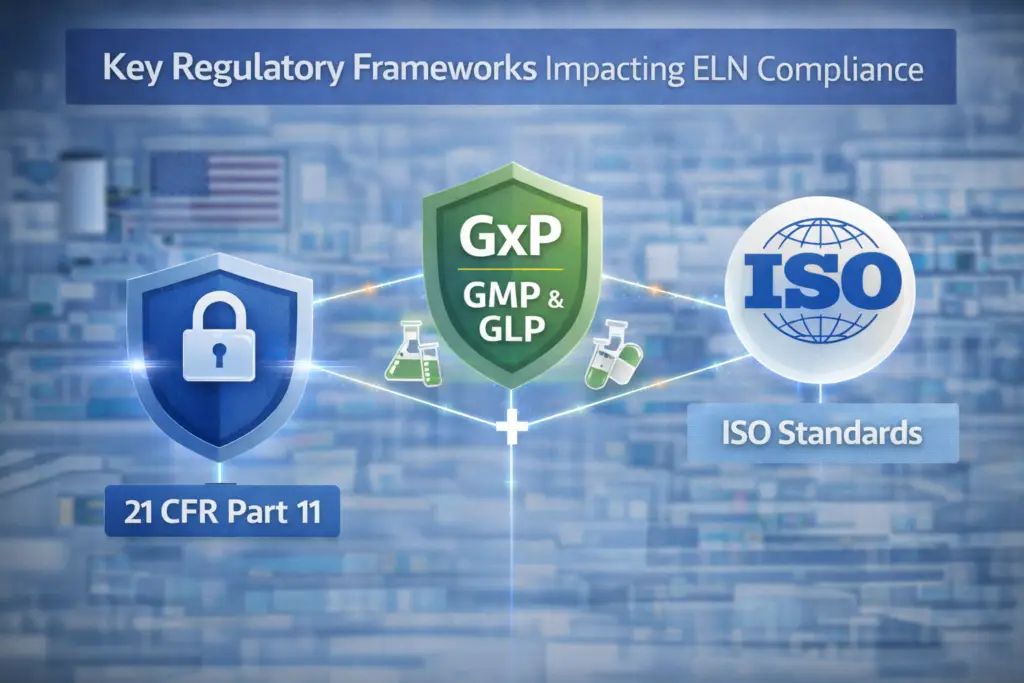
21 CFR Part 11
21 CFR Part 11 governs electronic records and electronic signatures for FDA-regulated entities.
It requires:
- System validation
- Secure audit trails
- Controlled system access
- Electronic signature controls
GxP, GMP, and GLP
Good Practice (GxP) regulations apply across:
- GMP (Manufacturing)
- GLP (Laboratories)
- GCP (Clinical)
All require validated computerized systems and documented procedures.
ISO Standards and International Expectations
Standards such as ISO 17025 and ISO 9001 emphasize:
- Controlled documentation
- Risk-based thinking
- Continuous improvement
- Data reliability
Global laboratories must align with both regional and international frameworks.
Core Technical Controls Supporting ELN Compliance and Data Integrity
Strong ELN compliance depends on technical safeguards.
Audit Trails
Audit trails must:
- Capture every change
- Record who made it
- Record when it occurred
- Prevent alteration
Audit trails are a cornerstone of inspection readiness.
Electronic Signatures
Electronic signatures must:
- Require unique login credentials
- Include password re-verification
- Be permanently linked to records
They must not be transferable or shared.
Role-Based Access Control
Access must follow the principle of least privilege.
Users should only access:
- Relevant projects
- Necessary data
- Approved workflows
Segregation of duties reduces compliance risk.
Secure Time Stamping
Time stamps must be:
- Automatic
- System-controlled
- Protected from manual editing
This ensures entries are contemporaneous.
Risk Management in ELN Systems
Compliance should follow a risk-based approach.
Risk assessments should evaluate:
- Critical data processes
- Impact on product quality
- Impact on patient safety
- Likelihood of system failure
High-risk functions require stronger controls and deeper validation.
Risk-based thinking aligns with global regulatory guidance.
Cloud-Based ELN Compliance Considerations
Cloud ELNs introduce additional factors:
- Vendor qualification
- Data hosting jurisdiction
- Cybersecurity controls
- Service Level Agreements (SLAs)
- Disaster recovery capabilities
Cloud does not eliminate compliance responsibilities. It shifts part of the responsibility to shared governance.
Vendor audits become critical.
Data Governance and Lifecycle Management
Data governance includes:
- Data classification
- Retention policies
- Archiving strategies
- Backup procedures
- Controlled deletion processes
Data must remain accessible and readable throughout its required retention period.
Improper lifecycle management can invalidate compliance.
Validation and Periodic Review of ELNs
Validation ensures the ELN works as intended.
This includes:
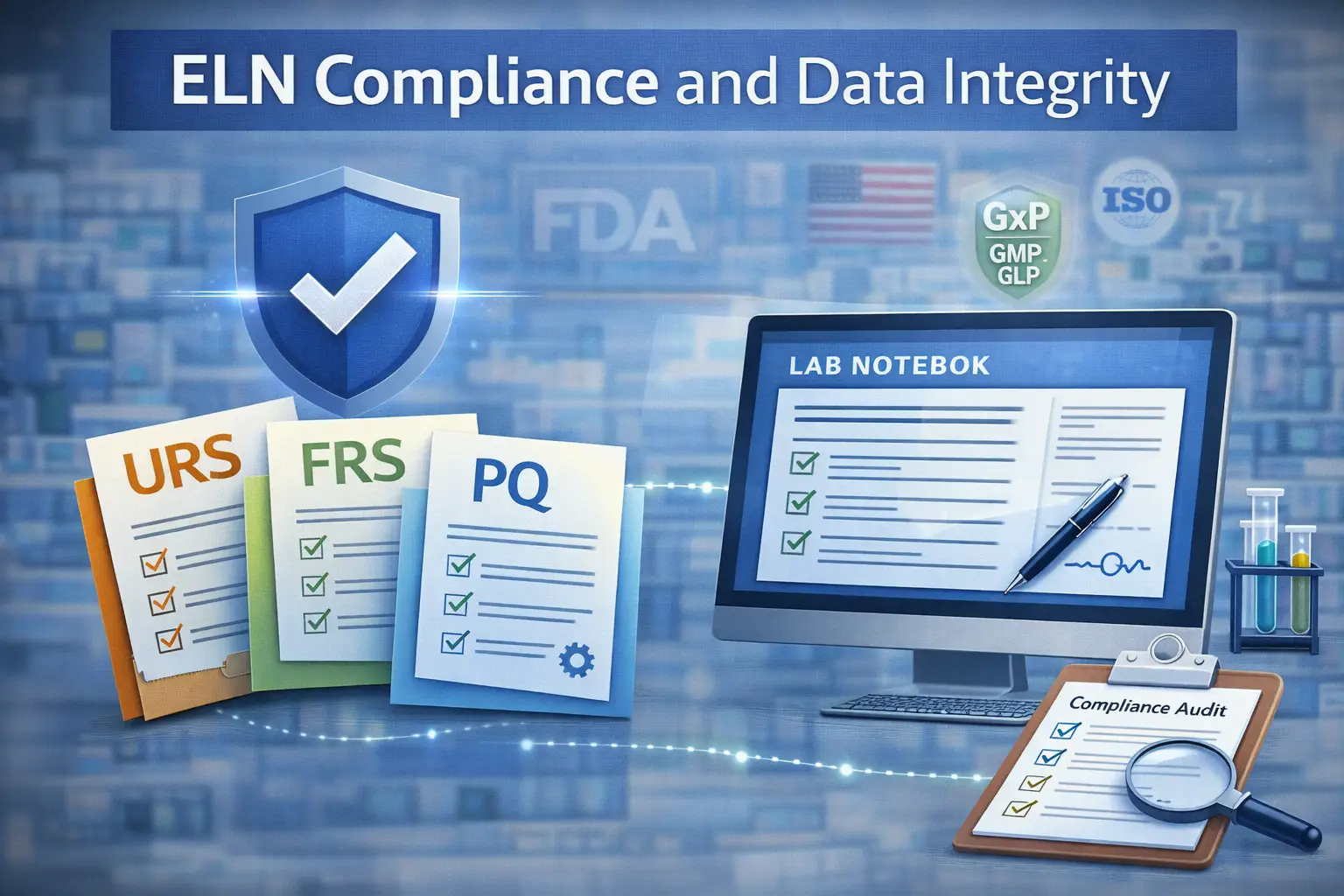
- User Requirements Specification (URS)
- Functional testing
- Risk assessment
- Traceability documentation
- Validation reports
Periodic review ensures continued compliance after:
- Software updates
- Configuration changes
- Regulatory changes
Validation is not a one-time activity.
Common Compliance Pitfalls in ELN Implementation
Common mistakes include:
- Poorly defined user requirements
- Over-customization without documentation
- Weak change control procedures
- Incomplete audit trail configuration
- Insufficient user training
- Lack of SOP alignment
Technology alone does not guarantee compliance. Governance does.
Building a Compliance-First ELN Strategy
To ensure strong ELN Compliance and Data Integrity:
- Define regulatory scope early.
- Perform detailed risk assessments.
- Select compliant vendors.
- Validate thoroughly.
- Implement strong SOPs.
- Train users consistently.
- Monitor and review continuously.
Compliance must be embedded in organizational culture.
Frequently Asked Questions
1. Is ELN validation mandatory?
Yes, in regulated environments under FDA, GMP, GLP, or ISO frameworks.
2. Can cloud ELNs be compliant?
Yes, provided vendor controls, security, and validation meet regulatory expectations.
3. What is the biggest compliance risk in ELNs?
Weak audit trails and poor access control management.
4. How often should ELNs be reviewed?
Periodic reviews are recommended annually or after major changes.
5. Are electronic signatures legally binding?
Yes, when implemented according to regulatory requirements.
6. Does compliance slow innovation?
No. Properly designed systems support both compliance and efficiency.
Conclusion: Why ELN Compliance and Data Integrity Define Modern Laboratory Excellence
When discussing ELN Compliance and Data Integrity, we are discussing the foundation of scientific credibility.
A compliant ELN:
- Protects your data
- Strengthens audit readiness
- Reduces regulatory risk
- Supports intellectual property protection
- Enhances operational reliability
In modern laboratories, digital documentation is not just convenient—it is accountable.
Organizations that prioritize ELN compliance gain more than regulatory approval. They gain trust, resilience, and long-term competitive advantage.
And in regulated science, trust is everything.